
The Goal Isn't to Become Perfect With Money
The goal isn't to become perfect with money. It's to become more intentional, more confident, and more prepared — one small step at a time.
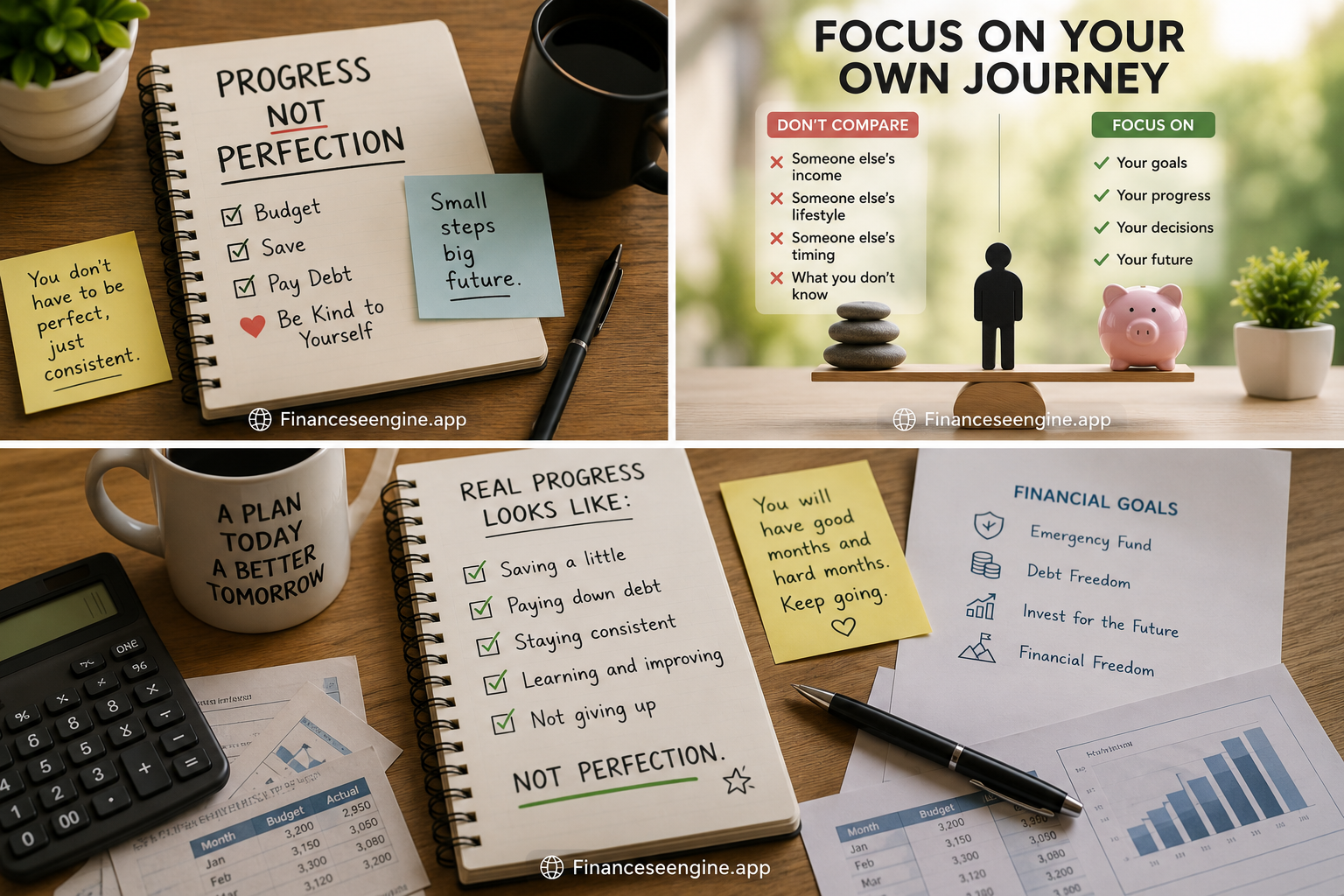
There is a strange pressure that comes with trying to become “good” with money. You start budgeting, you download an app, create a savings goal and make a promise to yourself that this month will be different.
No unnecessary spending. No impulsive buying. More saving. Less debt.
But that is harder than it seems. For a while, everything seems to be going according to plan. Then life happens: your car needs repairs, the electricity bill is higher than expected, a family member needs help, your child needs something for school, or an unexpected medical expense appears.
You thought you finally had it figured out. Or maybe you simply had a bad month and spent more than you planned.
And suddenly, you feel like you've failed.
But here's something I've come to believe about personal finance.
The Goal Isn't to Become Perfect With Money
The goal is to become more intentional with it.
Money isn't a test where you either pass or fail. There isn't a perfect financial life where every purchase is carefully calculated and every month ends exactly according to plan. Real life doesn't work that way. Your responsibilities mean your finances have to work in the real world — not in a perfect spreadsheet, nor in a perfect budget.
Why Trying to Be Perfect With Money Doesn't Work
There's nothing wrong with wanting to manage your money better. In fact, it's one of the best things you can do for your future. The problem starts when financial discipline turns into financial perfectionism.
You tell yourself that you shouldn't buy anything you don't absolutely need. You feel guilty when you spend money on entertainment. You become frustrated when you don't save as much as you planned.
Eventually, managing your money starts feeling like punishment — and that's usually when people give up. A financial plan that is so strict that you cannot realistically follow it isn't really a plan. It's a source of stress.
The better approach is to create a financial system that allows you to make mistakes, adjust when circumstances change, and continue moving forward. Because you will make mistakes. Everyone does.
Your Financial Life Won't Always Go According to Plan
One month you might save R2,000. The next month, you might save nothing. But that doesn't necessarily mean you've gone backwards. Maybe you had an unexpected expense. Maybe your income changed. Or maybe something important came up that required your attention.
The same thing applies to spending. You might have a month where you spend more than you intended. That doesn't erase all the progress you've made.
Instead of asking, “Why am I so bad with money?”
Try asking, “What happened, and what can I do differently next month?”
That small change in perspective can make managing money feel completely different. You're no longer judging yourself. Now you're learning from yourself.
Progress Matters More Than Perfection
Think about someone who is trying to get out of debt. They have R100,000 in debt and manage to reduce it to R90,000. Isn't that progress?
Then maybe an unexpected expense causes the debt to increase to R93,000. Technically, they went backwards. But they're still R7,000 better off than where they started.
Financial progress isn't always a straight line. Sometimes it's two steps forward and one step backward. What matters is the direction you're heading over time.
The same principle applies to saving. If you planned to save R3,000 but only managed to save R1,000, don't immediately think you've failed. You still saved R1,000. That's better than saving nothing. Small wins have a tendency to become bigger wins when you keep repeating them.
Every Payday Is a Fresh Opportunity
You can't change the money you've already spent. But you can change what you do with the money that comes next. And perhaps that's the most encouraging thing about personal finance. Every payday gives you another opportunity to make a better decision.
You don't have to get everything right.
You just need to keep learning. Keep adjusting. Keep moving.
Because the goal isn't to become perfect with money. The goal is to become more confident, more intentional, and more prepared with it.
And sometimes, that's more than enough.
Ready to build a budget that works in real life? Try the Budget Planner or Monthly Budget tools on Finance Search Engine.